
Custom Breakout Box Solutions
A custom breakout box is an interface system used between the ECU and the wiring harness, test bench or HIL system. It brings hidden power, ground, analog, digital, CAN, LIN, FlexRay and Ethernet signals out to a clear panel for measurement, debugging, fault injection and system integration.
Takemind provides customized breakout box solutions for automotive ECU testing, helping engineering teams access signals safely, reproduce faults repeatably and standardize reusable test procedures.
.png)
How We Support Your Test Project?
Customized Engineering Design
Leave the complex interface work to us. Based on the specification sheet defined with your team, Takemind supports the full process from technical design to engineering production, bringing hidden power, analog, CAN, LIN, Ethernet and other signals out to a clear and usable interface.
Professional Documentation Support
Complete technical documentation is the basis for successful production and long-term maintenance. Takemind can support pinout definition, wiring instructions, assembly documents and breakout box documentation.
Full Project Support
Discuss the complete test project with us. Our support is not limited to hardware. We can also provide system-level test support covering HIL integration, LV124 / LV148 electrical validation and functional safety fault reproduction.
One-Stop Accessory Supply
All related accessories can be supplied from one source to ensure system consistency. This includes ECU adapter harnesses, Y-cables, connector assemblies, shielding, wire gauge selection and project-specific labeling.
Real Delivery Cases
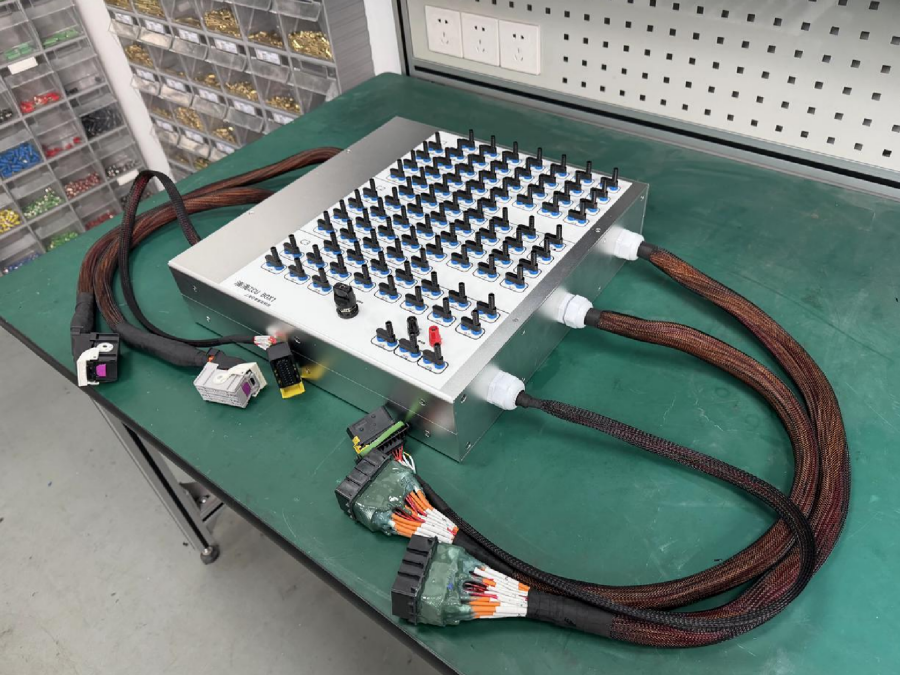
ZCU Controller Breakout Box
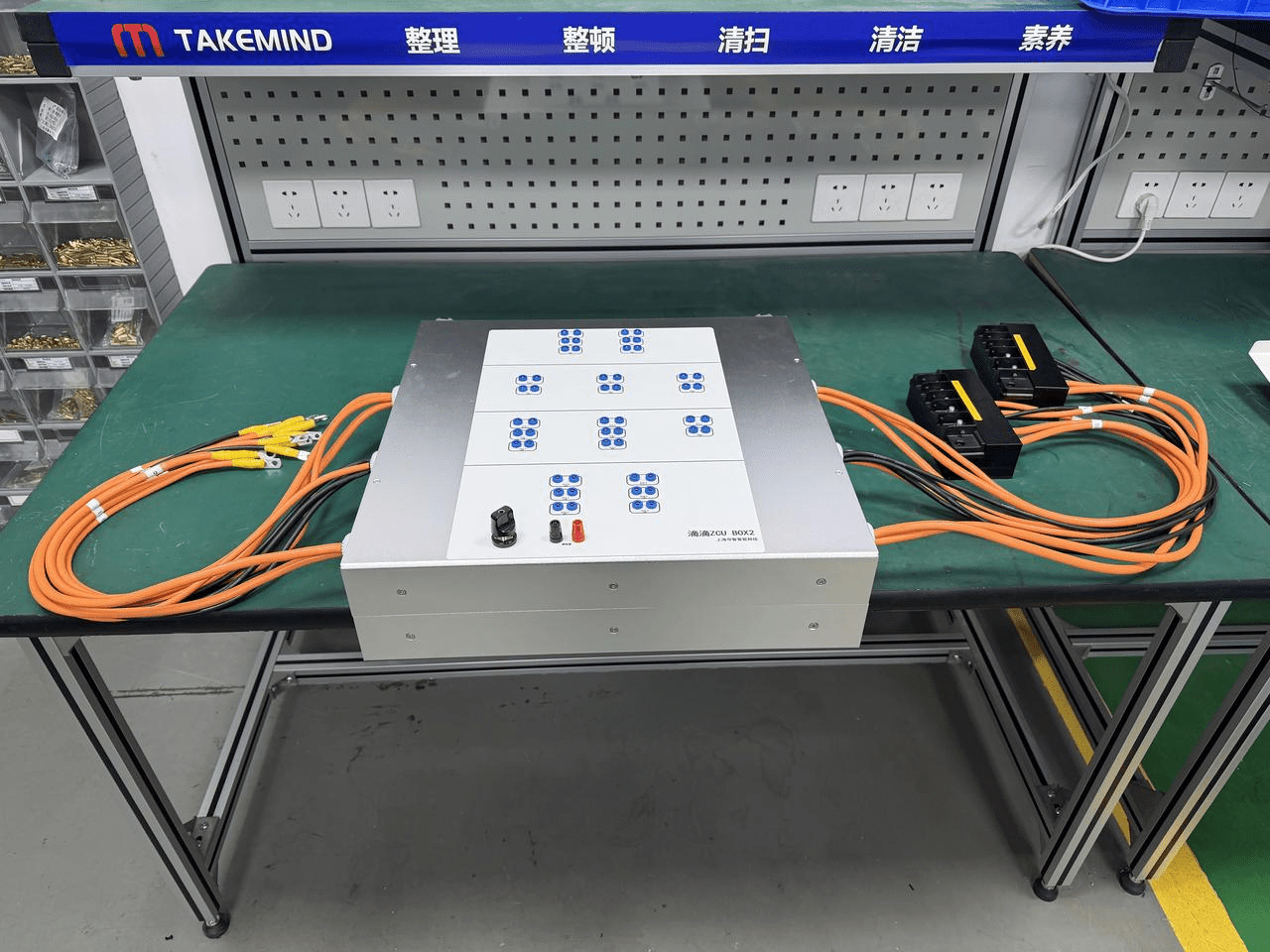
100A ZCU Controller Breakout Box
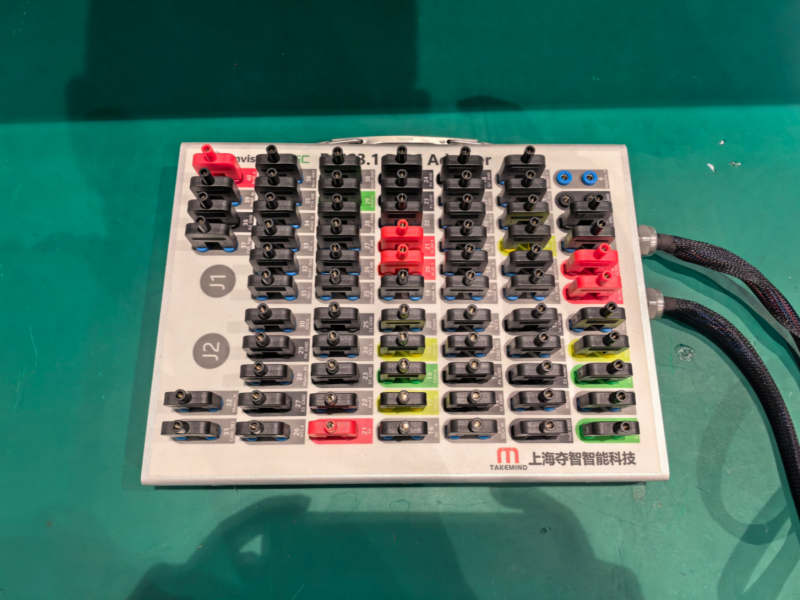
BMC BOB Breakout Box
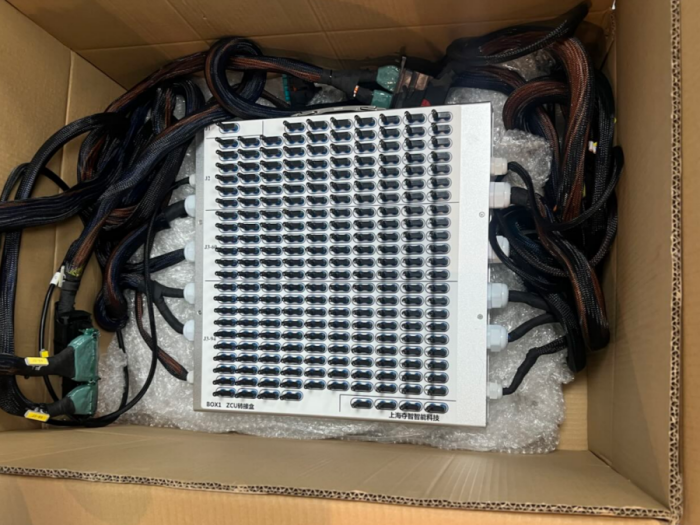
226-Channel ZCU BOB Breakout Box
Core Application Scenarios
For signal access challenges in automotive electronics development, validation and production testing, Takemind provides lifecycle-wide customization support:
- ECU Development and Debugging:Quickly access each signal channel, verify software logic and interface behavior, and reduce repeated wiring changes.
-
HIL / SIL Test Benches:Serve as the intermediate interface between the ECU and simulator, providing stable and maintainable test connections.
-
LV124 / LV148 Electrical Validation:Support high-standard power disturbance, load simulation and transient testing while keeping the DUT connection safe.
-
Diagnostics and Fault Reproduction:Simulate open circuit, short circuit and intermittent contact faults so that fault conditions can be repeated, recorded and traced.
-
Production Line and After-Sales Testing:Improve consistency through standardized inspection processes and reduce manual wiring errors.
- Harness and Connector Verification:Provide clear channel identification to help check terminal definitions and signal mapping.
Five Core Capabilities
Transparent Signal Access
Map ECU signals to banana jacks, D-Sub or BNC interfaces for direct measurement.
Load Connection
Connect power resistors, simulated loads or real actuators for ECU testing.
Fault Injection
Simulate open circuit, short circuit, reverse polarity and other fault conditions.
System Integration
Work with HIL benches, test cabinets, oscilloscopes, CAN tools and automation software.
Harness Customization
Provide OEM connector adaptation, custom harnesses, shielding and labels.
Contact Us
上海夺智智能科技有限公司
SHANGHAI TAKEMIND INTELLIGENT TECHNOLOGY CO., LTD
上海市嘉定区育绿路288号 5号楼
Building 5, No.288, Yulu Road, Jiading District, Shanghai
info@takemind.com
+86(0)21-5997-0838
FAQs
When Do You Need a Custom Breakout Box?
A custom breakout box is suitable when standard test boxes cannot match the ECU connector, pinout, signal grouping, fault injection method or test bench integration requirements. It helps convert complex wiring and temporary test setups into a reusable engineering interface.
Customizable Items
- ECU, sensor, actuator and vehicle harness interfaces
- Channel count, pin mapping and signal grouping
- Measurement terminals and communication interfaces
- Load type, load power, cooling and protection design
- Manual, semi-automatic or automatic fault injection
- Desktop box, portable case, 19-inch rack or load rack
- Panel labels, color zoning and channel numbering
- Harness labels, shielding and grounding design
- HIL, DAQ, diagnostic tool and automation script integration
Typical Delivery Process
-
Requirement Clarification:Confirm ECU type, connector, pinout, test standards, load needs and application scenario.
-
Solution Design:Define interface architecture, channel allocation, panel layout, protection strategy and system connection.
-
Engineering Manufacturing:Build the enclosure, harnesses, terminals, loads, switches and internal wiring.
-
Labeling and Verification:Check channels, insulation, continuity, labels and functional performance.
-
Delivery Support:Provide interface descriptions, wiring documents, test suggestions and expansion support.
Main Customer Groups
- Automotive OEMs and Tier 1 suppliers
- ECU, sensor, actuator and domain controller teams
- HIL / SIL test laboratories
- Electrical validation and reliability test teams
- Harness, connector and test equipment integrators
- New energy vehicle, commercial vehicle and special vehicle R&D teams