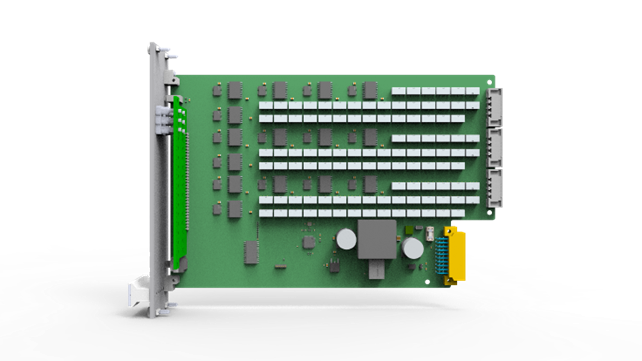
ECU End-of-Line Testing
What is ECU End-of-Line Testing?
ECU End-of-Line (EOL) testing is the final production test process used to verify the function, communication, programming status, calibration data, and electrical performance of electronic control units before delivery. It helps manufacturers confirm that each ECU meets production quality requirements and can operate reliably in the target vehicle or system.
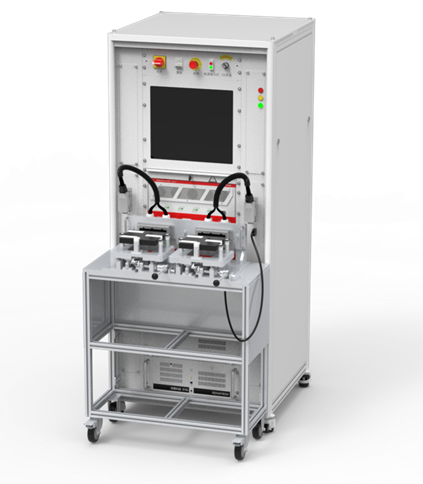
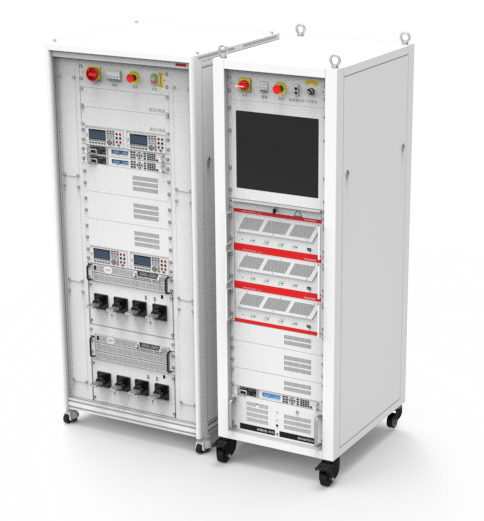
Takemind provides customized ECU EOL testing solutions for automotive electronics production lines. The solution can integrate automated flashing, parameter calibration, communication testing, functional testing, signal measurement, RFID or QR code traceability, test data storage, and production system integration to support stable and efficient mass production inspection.
Product Traceability
Traceability technologies such as barcode scanning (QR codes), chip ID recognition, and RFID tags are utilized to help enterprises track product production, EOL test data, and other vital information.
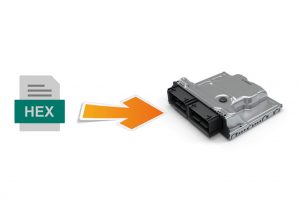
Flashing & Programming
Rich control interfaces for various programming equipment.
Supports the vast majority of semiconductor companies and tens of thousands of chip types; universal programmers help significantly reduce costs.
Electrical interfaces support CAN, JTAG, SWD, BDM, UART, SPI, I2C, etc.
Supports communication protocols including ISO-15765, ISO-14230, and J1939.
Supports programming protocols such as UDS, KWP2000, and IEEE 1149.1.
Parameter Calibration
Using measuring equipment such as oscilloscopes, multimeters, and spectrum analyzers to obtain the actual output voltage, current, and frequency of the controller. Algorithms perform secondary calculations on these parameters to generate calibration files written into the ECU, compensating for errors caused by individual component variances, temperature, and power supply fluctuations.
Automated Testing
Through automated fixtures, shielded enclosures, electronic load simulation boxes, PLC control systems, and current/voltage detection modules, as well as communication modules (CAN/LIN/ETH), the system automatically completes testing for all controller functions and outputs reports.
Data Storage
All information generated during the testing process can be recorded via Smart Factory Systems. Big data analysis is utilized to identify potential product anomalies and ensure quality consistency.